Before laser and light
An objective tone and phototype reading taken at the same anatomical site each time, rather than a category the patient selects from a chart.
Color, pigmentation and erythema read at a single spot, with phototype classified by ITA — in under a second, shown on the instrument own display.
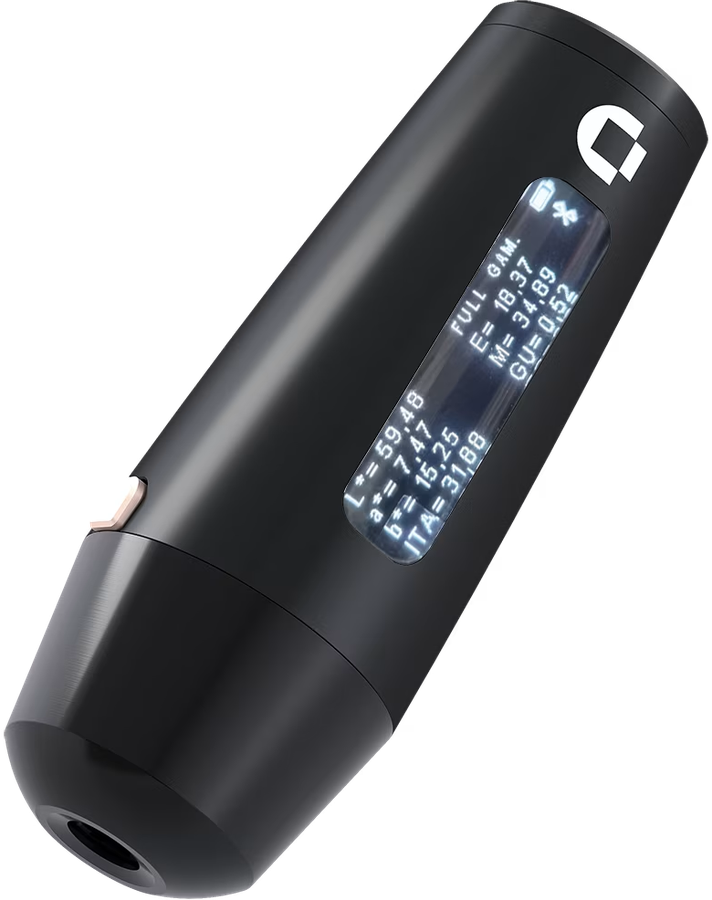
Fitzpatrick is what a patient tells you. ITA is what the skin tells you.
The DSM-4 classifies phototype by Individual Typology Angle — a measured value derived from lightness and yellow-blue, rather than a self-reported category. It reads pigmentation and erythema at the same time, so a pigment case or a course of laser can be tracked against numbers instead of recollection.
The six ITA groups Cortex lists. Swatches are illustrative only and are not calibrated reference values.
An objective tone and phototype reading taken at the same anatomical site each time, rather than a category the patient selects from a chart.
Separate melanin and erythema scales, so you can show a patient which component actually moved over a course of treatment.
The DSM-4 is used in research, pharmaceutical and cosmetic efficacy work, where repeatable color data is the point.
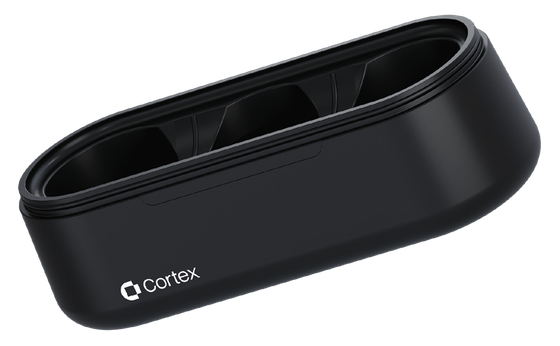
The calibrator is built into the storage case, carrying white, zero and gloss working standards. Nothing separate to store or send away, and readings hold their meaning from one month to the next — which is the entire point of measuring a patient twice.
A 2023 study in Advances in Skin and Wound Care recruited 61 participants across a range of skin colors and took measurements on the arm and face with a DSM Colorimeter, comparing the readings against the Munsell and Pantone color systems and the Eumelanin Scale. The authors concluded the instrument may detect skin discoloration earlier and more accurately across skin tones than the current standard of visual assessment.
Visual assessment of redness is least reliable in exactly the skin tones where getting it right matters most. An instrument does not have that problem.
Study: Sonenblum, Patel, Phrasavath, Xu and Bates-Jensen. Advances in Skin and Wound Care, 2023.That study used the earlier DSM III, not the DSM-4, and was carried out in a wound care setting with 61 participants. It is evidence about the measurement principle, not about aesthetic outcomes.
Specifications published by Cortex Technology and retrieved 15 September 2026. Confirm current details with our team before ordering.
Tell us how you would use it and we will send specifications and pricing, and arrange a demonstration.
Prefer to speak to someone? Email our team.
Form not loading? Open it in a new tab.